
A Tale of Two Game Feels
Let me take you back to 2008, when I was a bleary-eyed undergrad game designer who spent most of his time in Unreal Engine 3 and read every game design book he could get his hands on. One of those books was Game Feel: A Game Designer's Guide to Virtual Sensation, by Steve Swink.
It posits that a game's core elements: its mechanics, its art, and the physical way you interact with them, come together to form an emergent phenomenon called “game feel”. It’s important to note that game feel is not about whether a mechanic is “fun”, whatever that means, but simply pointing out that it does feel like something very specific to interact with a mechanic. Game designers should be aware of and strive to work those feelings with intentionality when producing a game. I would go so far as to say that game feel is more important to you than a game’s genre is and you might not even realize it. As a wise film critic once said, “You may not have noticed it, but your brain did.”
It goes so underdiscussed as a concept because it is by definition hard to talk about. Regular everyday feelings are hard enough to grasp and explain, so to find the words to properly describe how interacting with games and their mechanics makes you feel is doubly so. The fact that it resists easy definition, yet is so important to how players will receive your game, makes it all the more important to dive into for game designers.
To help make the idea more concrete, let’s look at two of the most famous video game characters in the world and what sort of game feel controlling them evokes.
In reductive terms, Mario and Sonic are the same. Any gamer would quickly tell you that Mario and Sonic are both “platforming” games. A genre defined by the fact that the core mechanic revolves around making tricky jumps between narrow ledges while avoiding obstacles and enemies.
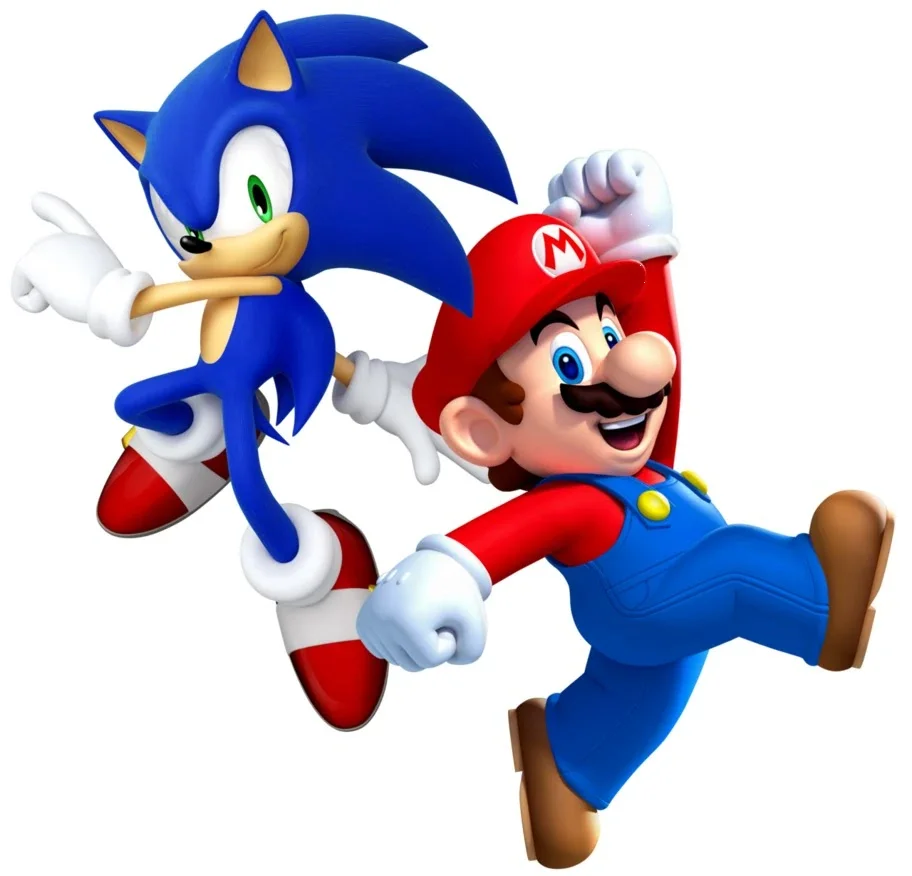
Both of these characters move left or right and are able to duck by pushing the arrow buttons on your controller. They also both have a button to jump. Mario has a run button, Sonic doesn’t. Because he’s always running. At a surface level, playing as both of these characters should feel basically the same. Any veteran of the console wars in the mid 1990s will tell you that they do not.
There are subtle differences in the precise way their mechanical systems are implemented, which accumulate to produce completely different game feels. In short, Sonic is designed around producing and conserving momentum. Mario is designed around precision.
When Mario and Sonic are running at full speed, if you let go of the controls at the same time Mario will stop moving long before Sonic does. If you press Duck while running at full speed as Mario, you’ll skid to a halt swiftly and shrink your profile to dodge projectiles. If you do this as Sonic, you’ll spin into a whirling ball that damages enemies and can allow you to build even more speed. Sonic is about building speed and momentum. When you have it, it feels SO GOOD. Losing it by slamming into an enemy or a spike pit and watching your rings go flying is devastating. There are few game feels that quite match the exhilaration of perfectly running a Sonic level.
By contrast, the most thrilling moments of a game like Super Mario Bros. 3 come as you are weaving your way through a dozen bullet bills and cannon balls on an airship where every platform is moving at once, knowing that if you touch one of them you will lose your precious power ups. But they move in slow predictable motions and your jump is just as predictable. When you can see how to thread the needle and hop your way through that death trap, that ALSO feels incredible, but in a completely different way from running a Sonic level.
These two different game feels have essentially come to define their respective legacies as platformers, with future games in the series being judged against those standards. Sonic had such difficulty early on in translating its gameplay to 3D because it was so tricky replicating conservation of momentum in a 3D space. It was easier by contrast to move the more methodical precision-based platforming of Mario to 3D with Super Mario 64.
And while Swink coined the term “Game Feel” in a video game context, I think he’s pointing at something far more fundamental to game mechanics as a whole. I would go so far as to say different sports have different game feels, different ways of gambling have different game feels, and so do different board games and tabletop games as well.
Even minor changes in mechanics can have a big impact on the game feel of a system, whatever type of game that is. The perfect case study to demonstrate how this works in tabletop gaming is with two classic games: Chess and its Japanese counterpart Shogi.
Like Mario and Sonic, Chess and Shogi can be described in broadly identical terms. They are both games that take place on grids. The goal of each game is the same, to checkmate your opponent’s king. Each player is in control of a variety of pieces that can move in different ways on the grid. So how different could they feel?
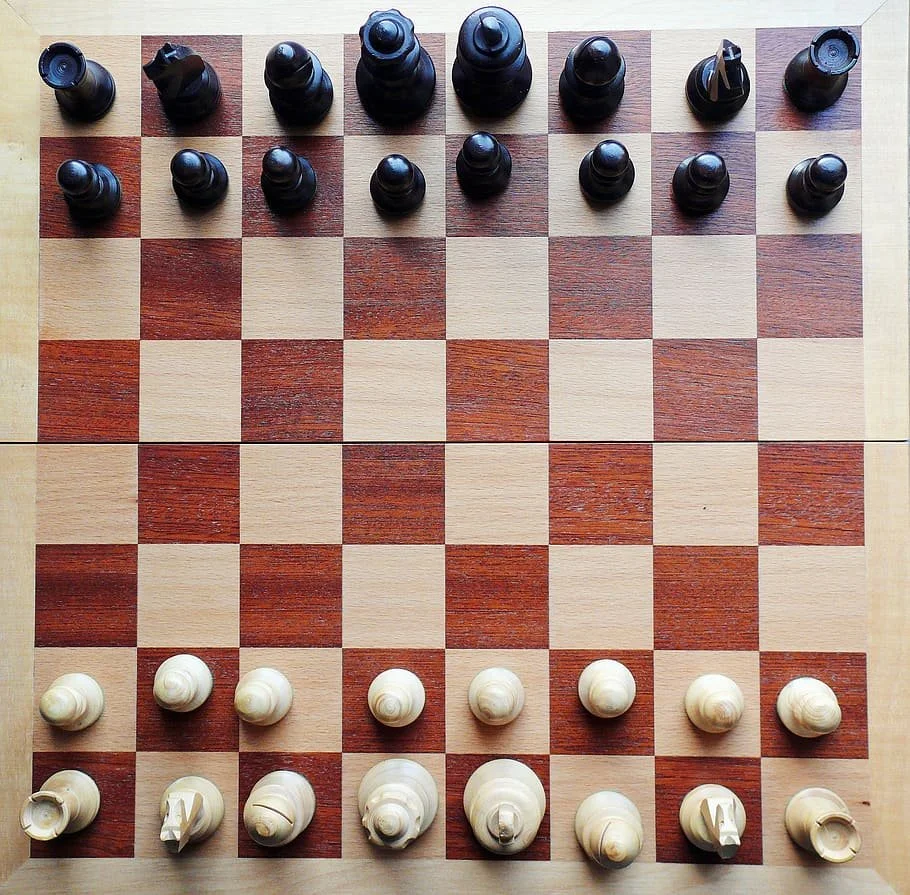
I propose to you that Shogi feels like a game of ordered rank and file soldiers marching against each other while Chess feels like a knife fight in a phone booth. Shogi feels like a view of the battlefield that a general has, while Chess feels like that same battlefield from the perspective of a Sergeant fighting in the mud.
Let’s look at the precise mechanical differences that give rise to this.
Shogi takes place on a 9x9 grid, whereas Chess uses an 8x8 grid. At first glance you might think that the larger board is a big contributor to the feeling that Shogi has more space to breathe, but I actually don’t think that’s true.
By the numbers, Shogi has 17 more squares on it than a Chess board. However, Shogi does include more pieces than Chess. In Chess each player controls 16 pieces, but in Shogi each player controls 20 pieces. With all of the pieces on the board, Chess has exactly 50% of the squares occupied, and 50% of the squares empty. In Shogi, there is only 1 more empty square than there are occupied squares, which means that 49.4% of the squares are occupied. In this way, the two are practically identical. So just in terms of how crowded the board is at the start of play, they’re actually very similar.
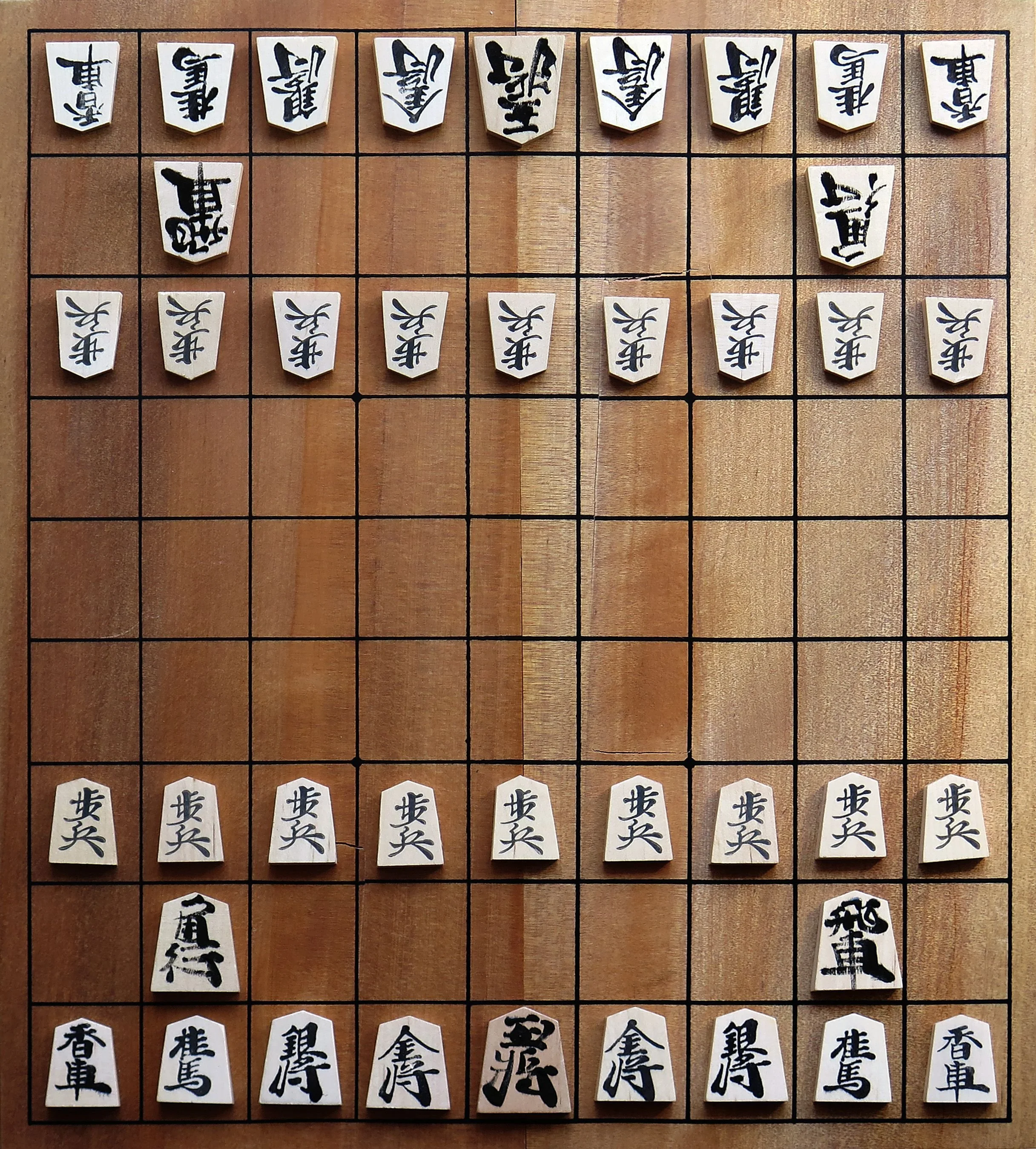
Instead, the first major contributor to their difference in game feel is actually in the setup of the pieces. Shogi deploys its pieces across 3 ranks, with the middle rank being mostly empty except for the bishop and the rook. Most of your back rank pieces in Chess don’t have any legal moves at the start of the game. Again, let’s go by the numbers. In Chess, there are 10 pieces that have legal moves from their starting positions. The other 6 are blocked off. By contrast in Shogi 17 of your 20 pieces have a legal move they can make on the first turn.
Put another way, at the start of the game 62.5% of your pieces in Chess can move, but in Shogi 85% of your pieces can move. A key point in this setup is that the Rook in Shogi is on this mostly empty 2nd rank, which grants the player a large amount of freedom in choosing how to deploy it. Indeed much of Shogi theory is built around whether and where to move the rook to. This setup also allows the player to maneuver the king into a variety of defensive positions without ever breaking their pawn ranks.
A larger grid with a more dispersed setup position creates a feeling of “behind the line” maneuvering and strategic decision making that gives Shogi its game feel.
All that extra space in the second rank makes you feel like you’re a general in the field, choosing which flank to position your troops on and where to set up the headquarters for your general before pressing the attack.
But that’s not all that contributes to Chess feeling so much more claustrophobic and deadly than Shogi.
Consider that in Chess, you have two bishops and two rooks while in Shogi you only have one of each. On top of that the knights in Shogi are much weaker than their Chess counterparts, only capable of jumping two squares forward and one square left or right, while a Chess knight has the possibility of making that same L-maneuver in any direction.
As a result, while the board is similarly crowded in terms of squares occupied by pieces, the number of threatened squares in Chess is significantly higher than it is in Shogi. With double the number of pieces that can maneuver across the board and far more maneuverable knights, as well as pawns that attack two squares at a time, the board is simply far more deadly to traverse in Chess.
And let’s take a minute to focus on the humble pawn. In both games pawns are the most numerous piece on the field and their differences have a suitably dramatic effect on the game feel of the two systems.
In Shogi, pawns can only ever move one square ahead. No moving two squares off the starting rank like in Chess. In Shogi, pawns also capture like normal pieces. Which is to say, they just capture the piece in front of them if they move forward. Chess pawns threaten two squares each, on their diagonals. In comparison to the simpler Shogi pawn who can only threaten the piece directly in front of it, the Chess pawn is a rogue. They leap forward off the starting line, stabbing at their front diagonals with daggers. Meanwhile, the Shogi pawn shuffles forward like a spearman, methodically poking ahead with its attacks.
Going between the two games, the armies of Chess have a clear power advantage. As you move into the mid-game of Chess, every square you start to consider is covered by multiple threats. Very quickly the field becomes a bloodbath of trades and gambits, while in the same number of turns a Shogi player may still be assembling their defensive structures. This is entirely a result of the number of rooks and bishops each side has, as well as the double move of the Chess pawn allowing for more rapid development of that greater number of pieces.
I didn’t even mention yet that Shogi has no piece that is equivalent in power to the Queen. The Queen is basically a super saiyan compared to anything in Shogi. But there is one other major mechanic that Shogi has that Chess does not which is the biggest differentiator of all: the drop rule.
Pieces in Shogi are not lost forever as they are in Chess. Instead, captured pieces may be redeployed as part of your own forces to any empty square on the board. As long as they have a legal way of moving off that square in the future, you can just paratroop these units into the field wherever you want.
Think about the feeling of losing a Rook in Chess. You’ve cleverly moved your Rook into position to assault the enemy King, but didn’t see how that would allow the knight to take your Rook. This feels like a catastrophe. One of your strongest warriors is slain, never to return. This still feels bad in Shogi, but your piece isn’t gone, he's a prisoner of war being conscripted back into the fight against you. And that door swings both ways. Capture that dropped piece and they’re yours again.
In Chess, material loss feels like you’re bleeding out as pieces of your forces are carved away. In Shogi, we are trading conscripts and mercenary forces between our two camps as the battle progresses.
The way that all of these differences stack up produces very different game feels when playing Chess or Shogi. Chess is more akin to StarCraft where units trade against each other in fast violent conflicts. Mistakes in positioning are punished harshly and swiftly. Shogi meanwhile feels like the battles of the Total War series. Total War is also a real-time strategy game like StarCraft, but its combat is slower and more grinding. Repositioning takes time, but has devastating consequences when the cavalry charge finally lands in just the right position of the enemy's flank. By the time you realize you’ve made a mistake, it’s often too late to fix.
The point here isn’t to say that Chess or Shogi’s take on this or that mechanic is better or to prove that one is a better game than another. Instead, my point here is that games that on the surface as a player might look very similar, they might feel very different to play. If you want a down-in-the-mud fight where 32 warriors enter the arena and usually only a few live to tell the tale then Chess is the game for you. If you want a pulled-back feel of a wider battlefield, reinforcing flanks, building up strong castles slowly, then Shogi will be more fun for you.
For game designers, we should consider what type of game feel we want to evoke in the player and keep that as a north star when developing. The concept of game feel is about letting yourself move past the almost useless question of “is this fun” and instead focus on “is this promoting the game feel I want to have”. Your game feel is going to be impacted by the smallest of decisions that compound and affect the entire system. Whether a piece can attack one square or two, whether or not a piece can move backwards. These are not just questions about balance, but about feeling.
For players, I still think this is a useful concept too. Genre can be a shorthand for game feel, but it can also lead you astray. The next time you bounce off of a game that you thought you’d love, consider what feeling it is that games you enjoy give you and what was lacking from that other one. When the art looks great to you, the genre is right up your alley, but somehow nothing is clicking, that is when you know the game feel is working against you.
That’s all for today, Stay Connected!